
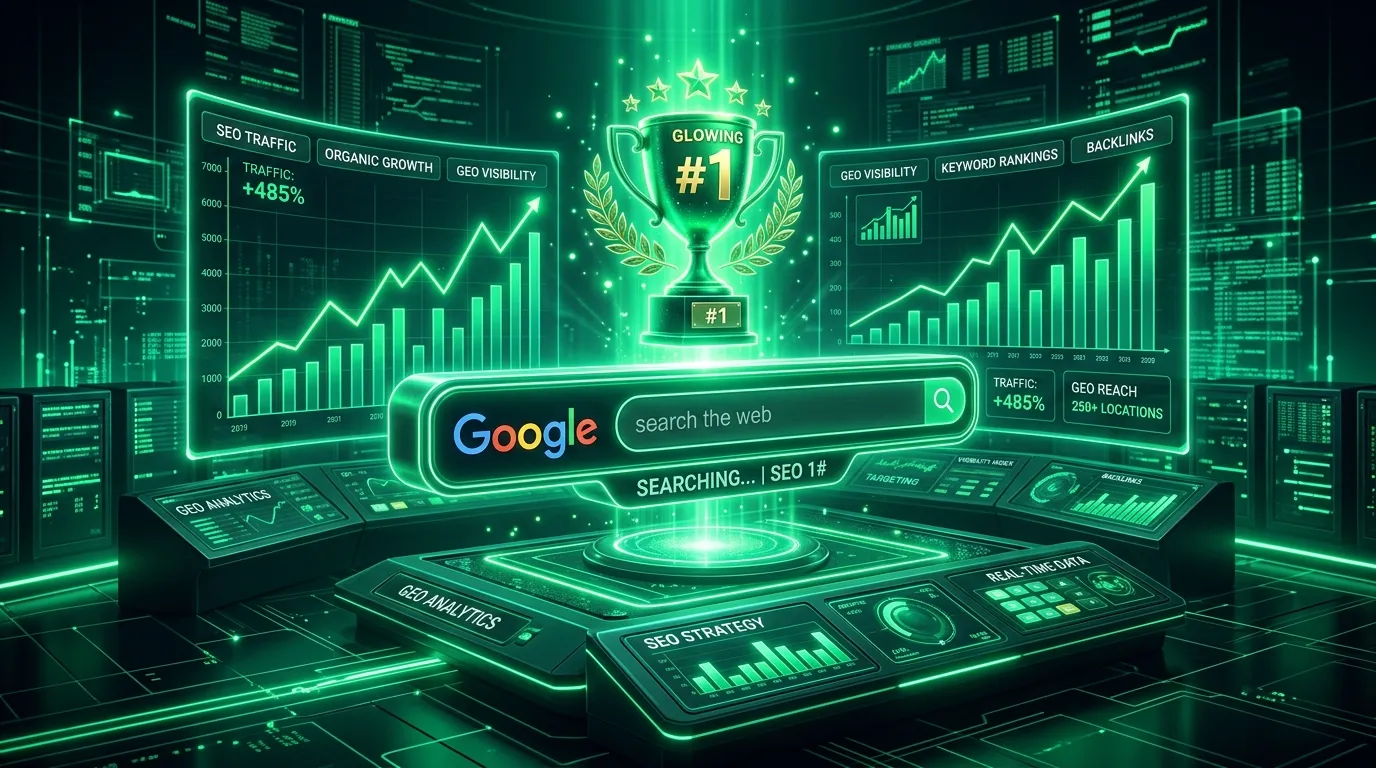
Quick Answer — AI Prompts for SEO & GEO Content
SEO prompts optimize for Google rankings (keywords, snippets, internal links); GEO prompts optimize for AI-engine citations (Perplexity, ChatGPT, Gemini) via citable Q&A blocks, fact-dense formatting, and schema. The 15 templates below cover both.
The complete AI prompts for SEO and GEO library: 15 templates spanning content outlines, featured snippets, schema markup, E-E-A-T, internal linking — plus the new discipline of Generative Engine Optimization for AI search citations.
SEO vs GEO: Optimizing for Google AND AI Engines
Modern SEO is no longer just about keyword density; it requires satisfying search intent, providing structured data, and optimizing for AI search engines like Perplexity, ChatGPT, and Google Gemini.
| Traditional SEO | GEO (Generative Engine Optimization) | |
|---|---|---|
| Target | Google SERP rankings | AI-engine citations (ChatGPT, Perplexity, Gemini) |
| Format | Keyword-rich prose | Q&A blocks, bullet lists, citable facts |
| Signal | Backlinks, CTR, dwell time | Entity clarity, schema, direct answers |
| Best section | Long-form narrative | 50-word direct answers, FAQ schema |
| Metric | Position, impressions | Brand mention rate in AI answers |
If an AI engine can extract a clean answer from your page, it cites you. Structure content as direct-question → concise-answer blocks, use schema markup, and put facts in list/table form — prose paragraphs get skipped.
15 SEO & GEO Prompt Templates
- 1. Comprehensive SEO Article Outline Prompt:
Act as an SEO Content Strategist. Create an optimized H2/H3 outline for the target keyword "[Keyword]". Map out user intent (informational/transactional), define target word count, list 10 LSI secondary keywords, write outline, and design FAQ queries. - 2. GEO (Generative Engine Optimization) Audit:
Act as a Perplexity/Gemini Optimization specialist. Review this blog content: [Paste Text]. Restructure paragraphs to use clear citation formats, lists, bullet points, factual summaries, and Q&A blocks to increase likelihood of inclusion in AI summaries. - 3. Click-Through-Rate (CTR) Title Optimizer:
Act as a CTR copywriter. Generate 10 high-converting click-worthy meta titles (max 60 chars) and meta descriptions (max 155 chars) for a page about "[Topic]". Optimize for high search CTR, integrate emotional hooks, and avoid truncation. - 4. Featured Snippet H2 Target Builder:
Act as a search rankings specialist. Write a concise, factual 50-word paragraph answering the question "[Insert Question]". Format it as a direct definition response optimized for Google's featured snippet paragraph boxes. - 5. Internal Linking Strategy Planner:
Act as an SEO architect. Create a structured internal linking blueprint mapping a cornerstone guide on "[Topic]" to 10 subtopics. Explain link anchor text rules, context relevancy, and pagerank distribution flow. - 6. Local SEO Schema Markup Generator:
Act as a Schema.org markup specialist. Generate LocalBusiness JSON-LD structured data schema for "[Business Name]". Include geo coordinates, open hours, social links, logo, price ranges, and payment details. - 7. E-E-A-T Author Bio Constructor:
Act as a Google Search quality evaluator. Draft an authoritative 150-word author bio page highlighting professional credentials, publications, university degrees, and industry awards to satisfy Google Experience, Expertise, Authoritativeness, Trustworthiness rules. - 8. Semantic SEO Keyword Cluster:
Act as a semantic search expert. Analyze the core topic "[Topic]". Create a keyword cluster map grouping 20 related search queries into distinct search intents (informational, commercial, transactional, navigational). - 9. SEO Content Pruning Guide:
Act as a growth marketer. Outline a data-driven content pruning strategy for a blog with 500 articles. Detail decision parameters based on traffic levels, page backlinks, conversions, and decide to redirect, rewrite, or delete. - 10. LSI Keyword Content Injector:
Act as an editor. Rewrite this blog post: [Paste Post] to organically integrate the following list of Latent Semantic Indexing (LSI) secondary keywords without keyword stuffing: [Paste Keywords]. Ensure smooth reading flow. - 11. E-Commerce Product Collection SEO H1:
Act as an e-commerce copywriter. Write a persuasive, SEO-optimized category page intro copy (150 words) for "[Product Type]". Integrate transactional keywords, target customer pain points, and outline category features. - 12. Backlink Cold Outreach Template:
Act as a link building outreach specialist. Write a personalized, low-friction B2B cold email pitching a guest post or link integration resource to a web editor. Highlight reciprocal benefits, value propositions, and keep it under 150 words. - 13. GEO Brand Citations Builder:
Act as a Perplexity brand visibility planner. Write a brand summary description for "[Company Name]" highlighting key statistics, core products, and customer testimonials. Structure it to maximize brand mentions in AI chatbot recommendations. - 14. PDF/Image Alt-Text Schema:
Act as an accessibility and image search SEO engineer. Write detailed descriptive Alt-Texts and caption text schemas for 5 custom diagrams detailing a microservice architecture flow. Optimize for image search index rankings. - 15. User Search Intent Re-writer:
Act as a CRO strategist. Analyze this landing page copy: [Paste Copy] which has high bounce rates. Identify mismatches between informational user search intent and hard-sales call-to-actions. Rewrite to align expectations.
The Featured Snippet Formula
Featured snippets (position 0) and AI Overviews both pull the same pattern — a direct-question heading followed by a 40–60 word definitional answer. Prompt 4 above produces exactly that. Formatting rules that win snippets:
- Paragraph snippet: question as H2, 40–60 word direct answer immediately after.
- List snippet: "how to" / "best X" questions → numbered/bulleted list.
- Table snippet: comparisons ("X vs Y"), specs, pricing → HTML table.
- Never bury the answer: the answer must appear in the first 100 words after the question heading.
Schema Markup That Moves the Needle
Structured data is the highest-leverage GEO signal — it tells AI engines exactly what your content is:
- Article schema: headline, author, dates, image — on every post (this site includes it).
- FAQPage schema: marks Q&A blocks as citable answers — Google requires visible-content parity.
- HowTo schema: step-by-step processes with images.
- Product/Offer schema: price, availability, ratings for e-commerce.
- Organization/Person: E-E-A-T entity signals linking author → brand.
Automate SEO Articles at Scale
Generate complete long-form articles in seconds with RSFlowHub Blog Generator API and auto-create metadata with SEO Meta Generator API.
curl -X POST "https://rsflowhub.com/api/v1/content/blog-generator" \
  -H "X-API-Key: YOUR_FLOWHUB_API_KEY" \
  -H "Content-Type: application/json" \
-d '{"keyword": "AI prompts for developers", "word_count": 2000, "faq": true}'Key Takeaways
- SEO gets you ranked on Google; GEO gets you cited in AI answers — you need both in 2026.
- Structure content as question → direct-answer blocks; AI engines extract, prose gets skipped.
- Featured-snippet formula: question H2 + 40–60 word definitional answer in the first 100 words.
- FAQ + Article schema is mandatory for AI-engine citability — and must match visible content.
- Automate outlines, articles, and meta at scale via the Blog Generator + SEO Meta Generator APIs.


Lucas Vance Member
3 days agoGenerative Engine Optimization (GEO) insights here are spot on. Structuring H2/H3 headers for AI search engines like Perplexity got our pages cited instantly.
Reply to Lucas Vance
Chloe Bennett Member
5 days agoThe cold email outreach sequence prompts helped us achieve a 22% reply rate on our latest B2B SaaS campaign.
Reply to Chloe Bennett